

Blogs
We keep you up to date on the most recent real estate news and events.
The Value of Owning Land in a Structurally Planned Township
Not all land appreciates equally. Two plots of identical size can yield vastly different outcomes over a decade, depending entirely on their surroundings. While an investor might look at a plot of land and see an appreciation calculator based purely on raw square footage, experienced wealth creators understand that a boundary wall does not safeguard value. The trajectory of a land asset is fundamentally bound to the structural foresight of the ecosystem in which it rests.
In the expanding landscape of the Indian real estate market, this divergence in value has become increasingly stark. Historically, purchasing land in India meant navigating fragmented layouts, uncoordinated municipal expansions, and the eventual retrofitting of basic civic amenities. However, as urban sprawl strains existing tier-1 metros, high-net-worth individuals (HNIs) and non-resident Indian (NRI) investors are shifting their capital toward structurally planned environments. The search for premium property for sale in Panchkula and the wider Tricity region highlights a clear macroeconomic trend: buyers are no longer just looking to buy land; they are investing in highly managed environments.
When evaluating options like standalone plots in Panchkula versus cohesive ecosystems like Trident Hills, the financial and qualitative differences become apparent over time. The true value of land does not lie within its physical coordinates. It is generated by the master planning, structural integrity, and governance frameworks that surround it.
Why Land Alone Does Not Create Value
Raw land is a passive asset. Its utility is entirely dependent on external connections. In an unplanned development, a buyer assumes significant systemic risk. An individual can construct a beautifully designed estate, but if the local civic authority fails to manage the surrounding area, the asset's value will suffer. Uncoordinated neighbouring construction, unpredictable zoning changes, and a lack of dedicated commercial or green spaces can quickly hurt a property’s long-term value.
Real estate value is rarely determined in isolation. The quality of neighbouring development, infrastructure, and governance directly influences long-term appreciation. This is why a standalone independent house for sale in Panchkula often exhibits more volatile valuation trends than properties in managed environments.
Without a collective infrastructure framework, a plot owner remains highly vulnerable to municipal delays, unpaved approach roads, and chaotic neighbourhood growth. Buyers evaluating long-term land investments increasingly look beyond plot dimensions and focus on the quality of the surrounding ecosystem.
The Role of Master Planning: Defining Spatial Predictability
Master planning introduces predictability to land ownership. It ensures that the residential plot you buy today will not be compromised by an industrial workshop or an intrusive commercial development tomorrow. Structural planning establishes a clear hierarchy of roads, dedicated pedestrian pathways, and fixed zones for green spaces, community infrastructure, and commercial hubs.
In emerging premium corridors, such as those connecting Panchkula with historical sub-markets like Pinjore, master planning provides the spatial clarity modern families require. Looking at the broader distribution of residential plots in the tricity, developments that prioritise low-density living and integrate natural topography tend to hold their value better. For example, the design philosophy behind Trident Hills Panchkula demonstrates how a master plan can preserve natural contours and wind paths while delivering wide, well-structured internal roads.
This type of layout prevents the traffic congestion common in unplanned settlements where narrow lanes are shared by residents, visitors, and commercial vehicles alike. Furthermore, choosing master-planned plots in Pinjore guarantees that green lungs and parks are integrated from day one, rather than added as an afterthought in whatever small patches of land remain.
Infrastructure as a Value Multiplier
The financial appreciation of land is directly tied to the infrastructure beneath it. In structured townships, infrastructure is treated as a foundational grid built before individual homes are built. This includes subterranean stormwater drainage systems, dedicated water treatment plants, fibre-optic communication networks, and planned electricity lines that eliminate unsightly overhead wiring.
According to research from JLL India on plotted development trends, organised townships command a financial premium of 25% to 40% over standalone plots, primarily due to this immediate infrastructure readiness. When evaluating Panchkula residential plots, the presence of a comprehensive dual-plumbing water system or a professionally engineered stormwater network changes how the land functions.
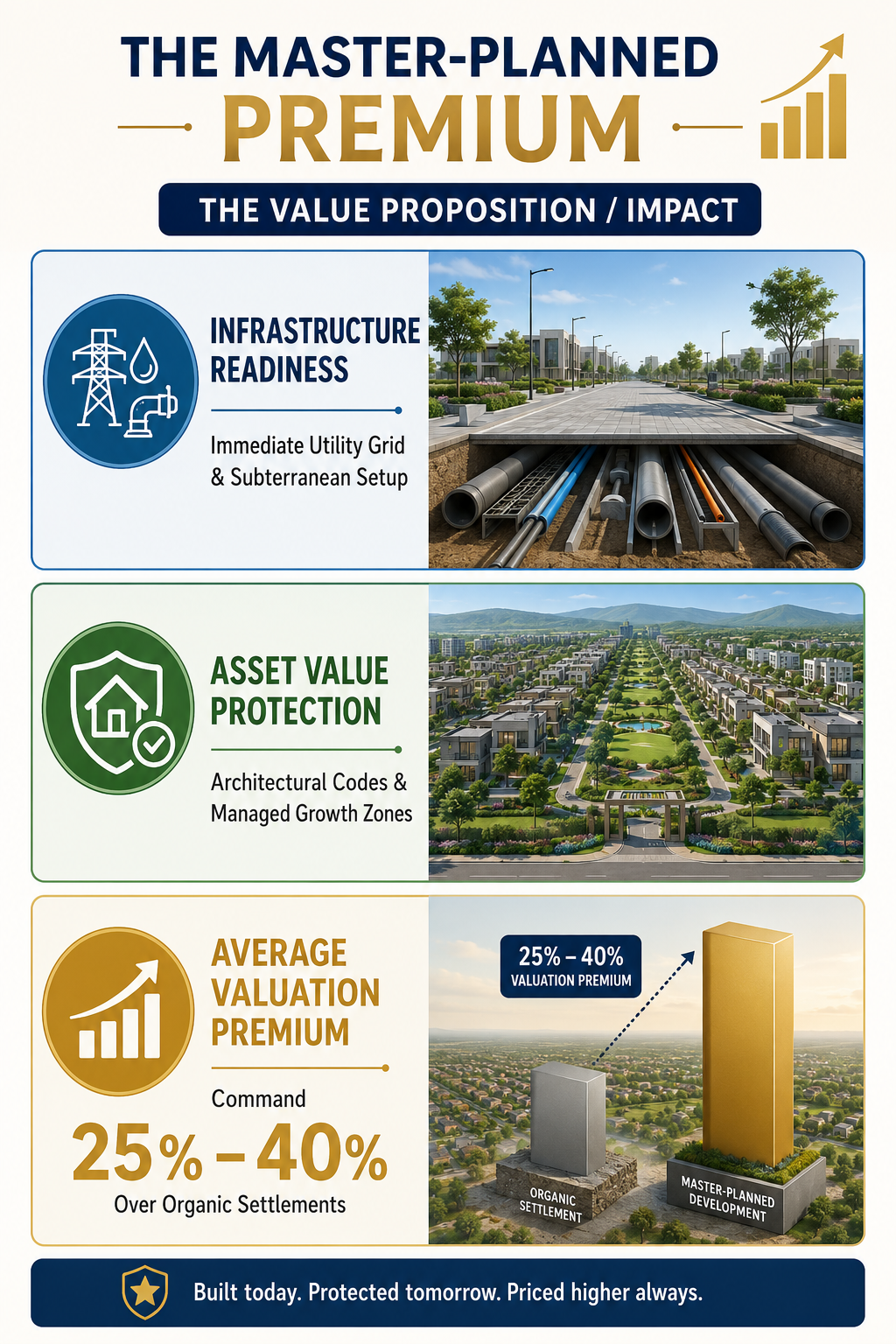
Unplanned developments often suffer from waterlogging during monsoons because their drainage networks are built piecemeal. A master-planned community treats water management as a single, cohesive system. For an investor looking at residential property for sale in Panchkula, this subterranean infrastructure serves as an unwritten insurance policy, protecting the structural integrity of their future home from the ground up.
Governance and Long-Term Value Protection
The primary challenge for standalone land assets over a 15- to 20-year period is the lack of ongoing governance. Once a traditional municipal plot layout is sold, enforcement of building codes, setback rules, and architectural harmony is left to fragmented local bodies. This often leads to inconsistent vertical extensions, mismatched design styles, and the conversion of residential zones into unauthorised commercial spaces.
Integrated townships solve this issue through internal governance frameworks and strict development controls. These guidelines dictate FAR (Floor Area Ratio) limits, height boundaries, and aesthetic rules that maintain visual harmony across the community. This structured approach is highly visible in low-density residential enclaves such as Windsong Residences, where the design language remains sophisticated and unified.
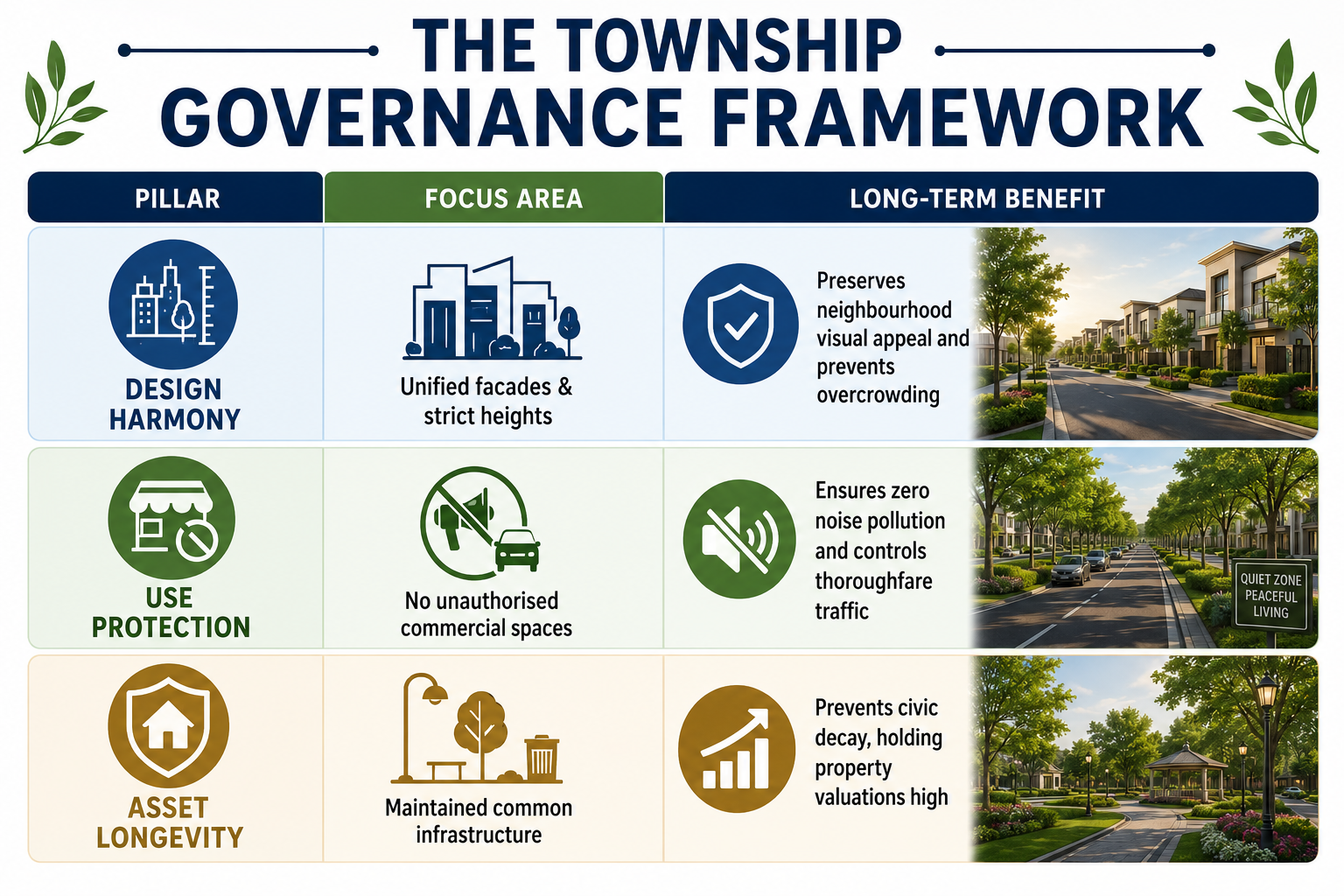
These frameworks ensure that an independent floor for sale in Panchkula within a planned township retains its value, as neighbouring properties are held to the same standards. A clear enforcement mechanism prevents common neighbourhood issues like street parking disputes and unauthorised structural changes, providing long-term security for HNI and NRI investors.
Why Planned Communities Age Better
As urban areas grow, the differences between organic settlements and planned townships become more distinct. Unplanned neighbourhoods often deteriorate over two to three decades due to overloaded infrastructure, broken roads, and a lack of dedicated maintenance funds. In contrast, master-planned developments are designed to age gracefully.
According to the Ministry of Housing and Urban Affairs (MoHUA), integrated infrastructure is far more resilient than conventional municipal networks in the face of urban growth. Choosing a plot in an organised Panchkula township ensures your investment benefits from professional management teams dedicated to maintaining essential utilities, roads, and green spaces.
This professional upkeep ensures the neighbourhood remains highly desirable for decades. This longevity stands in stark contrast to older, unmanaged urban pockets, where residents often move out to escape congestion, turning what were once premium residential apartments in Panchkula into poorly maintained rental properties.
The Relationship Between Livability and Appreciation
Long-term real estate value is driven by sustained residential demand. A piece of land appreciates because people want to live on it, raise families there, and return to it at the end of the day. Modern livability requires a balance between natural environments and urban conveniences—a combination that traditional urban centres struggle to provide.
For families exploring the Tricity, properties nestled near the Shivalik foothills, including plots for sale in Pinjore, offer an appealing blend of clean air, lower ambient temperatures, and open green spaces. In developments like Winsong Residences in Panchkula, this natural advantage is enhanced by modern lifestyle amenities, such as secure perimeter access, dedicated walking tracks, clubhouses, and wellness facilities.
When land is integrated into an ecosystem focused on well-being, its value follows a different growth path. High-net-worth individuals are consistently willing to pay a premium for security, privacy, and low-density environments. This lifestyle premium directly translates into strong rental yields and excellent capital gains over time.
What Buyers Should Evaluate Before Purchasing Land
Before deploying capital into plotted real estate, wealth creators should move past basic price-per-square-foot comparisons and evaluate the underlying infrastructure asset. This practical checklist outlines the key factors to consider:
- Zoning and Perimeter Security: Ensure the development has a clear, legally secure perimeter with controlled entry and exit points to prevent external encroachment.
- Road Hierarchy and Widths: Look for internal arterial roads 9 to 12 meters wide, with dedicated utility corridors beneath them to avoid future road-cutting.
- Water and Waste Management: Confirm the presence of internal water treatment plants, rainwater harvesting systems, and a dedicated sewage network.
- Architectural Guidelines: Review the developer’s covenant regarding building heights, setbacks, and design rules to ensure long-term visual harmony.
- Open Space Ratio: Check that at least 30% to 40% of the total township area is legally reserved for green spaces, parks, and public amenities.
When evaluating premium options, projects that meet all these criteria—such as the residential plots in Panchkula offered within the Trident Hills plots portfolio—provide a reliable blueprint for secure, long-term real estate investment.
The True Measure of Land Value
The long-term performance of land real estate demonstrates that standalone property investment comes with hidden structural risks. While raw land can be impacted by unpredictable surrounding development, a master-planned township creates its own steady economic environment.
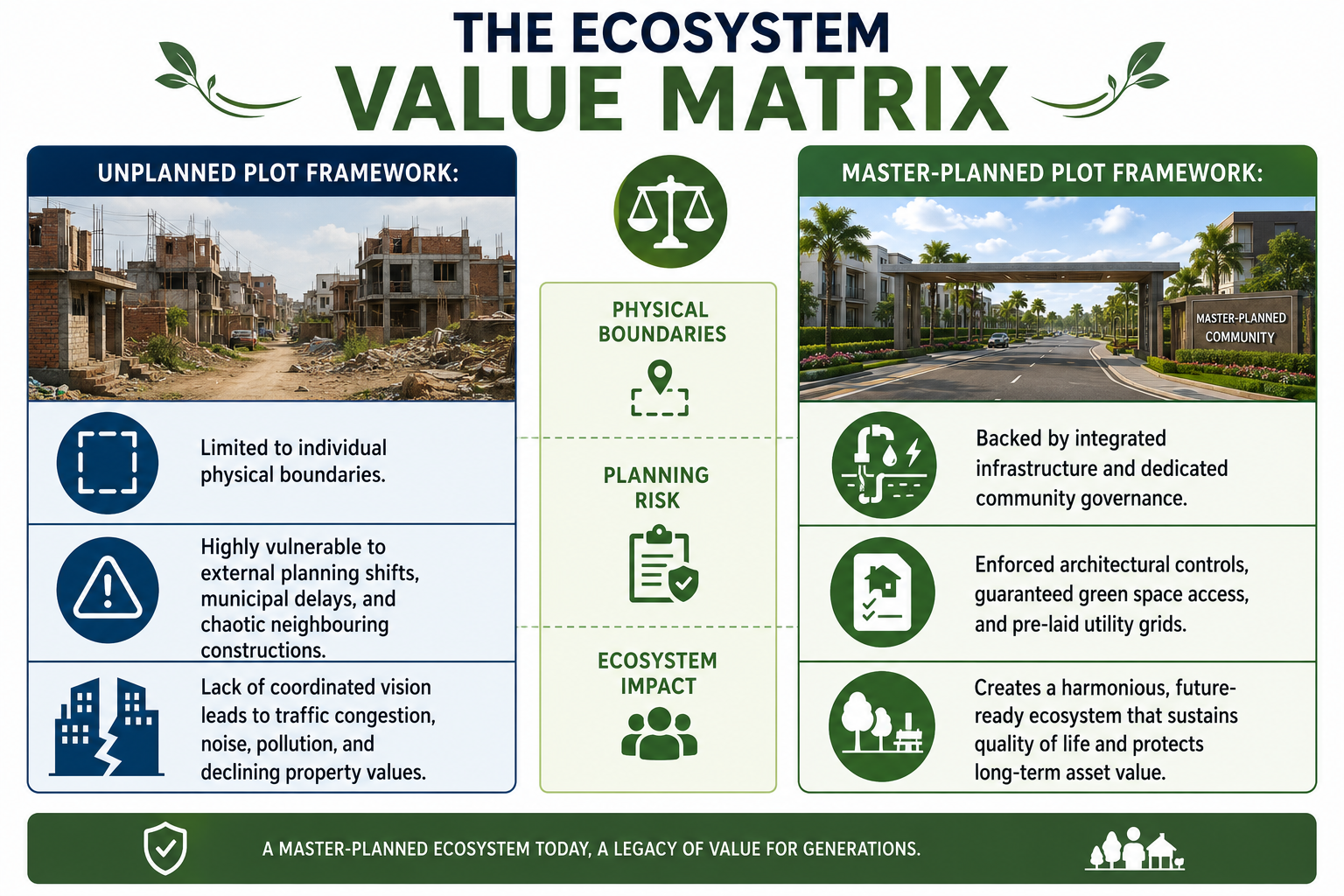
For buyers focusing on premium property in Panchkula, the real value lies in choosing an ecosystem that protects and grows your investment over time. Selecting a well-governed residential property in Panchkula ensures that your asset is protected from the issues of uncoordinated urban sprawl. Ultimately, the most valuable land is rarely defined by its physical boundaries. The quality of planning, infrastructure, governance, and the surrounding community determines its value.
