

Blogs
We keep you up to date on the most recent real estate news and events.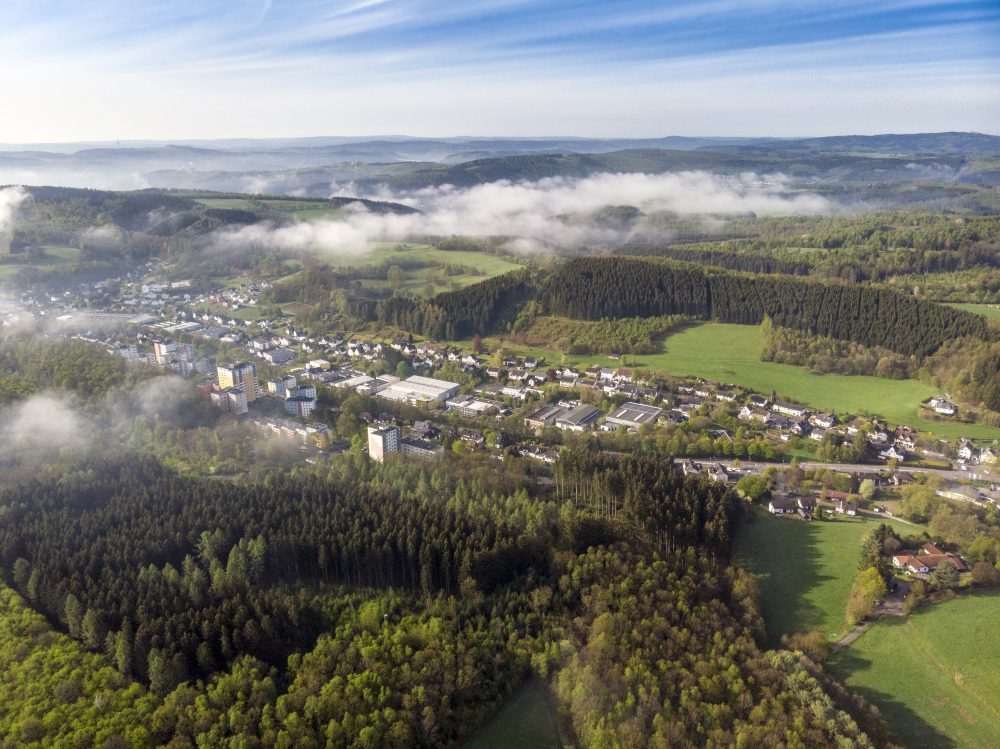
How Low-Density Living Improves Privacy, Mental Wellbeing & Community Life
1. Same Home, Different Experience
Imagine two identical homes sharing the same architectural blueprint, premium finishes, and interior square footage. Yet, the experience of living in them is entirely different. One sits in a high-density cluster—towers pressing in from all sides, traffic humming through windows, and a lingering sense of being observed. The other sits in a low-density environment, surrounded by greenery, where the loudest sound at dawn is the wind, and sightlines extend to the horizon. The difference is not the structure; it is the space around it. In modern real estate, the space between homes is as important as the home itself. Density is rarely discussed as a design feature. Yet it is the invisible architecture that governs our daily lived experience, shaping everything from baseline stress levels to the quality of our social interactions.
2. The Reality of High-Density Urban Living
In rapidly expanding Indian metropolises, high-density living has become the accepted default. Historically, the narrative of urbanisation celebrated vertical growth and infrastructural concentration. However, this level of concentration comes with emotional and sensory fatigue. High-density urban living inherently normalises a state of constant friction. It is characterised by chronic noise pollution, suffocating traffic congestion at entry nodes, and a severe deficit of spatial privacy. In major Indian cities, the sheer volume of residents sharing finite civic infrastructure forces daily competition—whether waiting for elevators, navigating crowded basements, or seeking a quiet bench. The post-pandemic era triggered a structural shift in buyer psychology. Families seeking lifestyle upgrades and High Net Worth Individuals (HNIs) began rejecting forced proximity. There is a sustained migration toward plotted communities and low-density townships, driven by the realisation that a beautiful home loses its value when the surrounding environment feels constantly stressful.
3. Understanding Density Beyond Numbers
In architectural blueprints and planning committees, density is treated strictly as a mathematical metric: the number of residential units or individuals per acre. But for the end-user, density is a daily lived experience. While high-density planning is fundamentally an exercise in maximising yield and capital efficiency for the developer, low-density planning is an exercise in maximising the human experience. The core argument is that density shapes behaviour, not just land use. When a developer intentionally restricts the number of homes on a parcel of land, they actively engineer a calmer, more deliberate pace of life. A low-density environment transforms everyday movement into a calmer and more restorative experience. It allows for the integration of nature, preservation of sightlines, and cultivation of an environment where the architecture breathes organically.
4. Mental Wellbeing & Environmental Stress
Living in crowded environments takes a heavy toll on mental health. Public health data shows that high-density living causes chronic sensory overload from constant noise and visual clutter. The World Health Organization notes that this continuous urban crowding spikes cortisol levels, leading to long-term stress. On the other hand, low-density neighborhoods provide a much-needed sensory buffer. Research from the Harvard T.H. Chan School of Public Health reveals that quiet, uncrowded natural spaces help the brain recover and restore focus. Designing communities with more space between homes lowers environmental stress and gives residents the mental breathing room that modern city life lacks.
5. Privacy: The Most Undervalued Luxury
In the modern urban landscape, true privacy is a scarce luxury. While privacy is typically evaluated through internal floor plans, genuine personal space is dictated by external density. High-density living frequently compromises both visual and acoustic privacy. When balconies face one another across narrow setbacks, the home ceases to be a sanctuary. Low-density plotted developments resolve this. By ensuring generous setbacks and strategic landscaping, these environments protect the home's sanctity. Visual privacy is maintained by directing sightlines toward green spaces. Crucially, acoustic privacy is preserved; physical distance between structures acts as a natural sound insulator. Residents gain the psychological freedom to exist in their space without the subconscious pressure of being observed. Low density is the architectural framework that structurally guarantees this spatial autonomy.
6. Noise & Congestion: Daily Friction Points
The ambient environment defines a community's livability. In densely packed developments, noise and congestion are daily sources of friction that erode quality of life. High population densities mean greater vehicular movement, turning internal roads into busy thoroughfares. The general cacophony of a concentrated populace creates baseline noise pollution that penetrates the home. Conversely, low-density communities are intentionally designed to decelerate movement. With fewer units per acre, traffic volume drops exponentially. Internal roads function as safe pathways for pedestrians rather than mere transit corridors for cars. Shared spaces are never subjected to the crushing pressure of overcrowding. This reduction in friction points allows residents to experience their community at a relaxed pace, reclaiming hours previously lost to internal bottlenecks and stress.
7. Community Quality in Low-Density Environments
There is a common misconception that higher density fosters stronger communities. In reality, forced physical proximity often leads to social withdrawal as individuals protect their personal space. True community quality flourishes in low-density environments. The Urban Land Institute's research on community planning and density suggests that thoughtfully spaced neighbourhoods encourage more meaningful, voluntary social interactions. When residents are not competing for access to shared amenities, their interactions become relaxed and intentional. Shared spaces with lower crowd pressure—such as uncrowded walking trails or expansive gardens—function as natural gathering points rather than transit hubs. The social fabric of a low-density township is woven through shared appreciation of the environment, resulting in a cohesive community that values quality over quantity in interactions.
8. Trade-Offs & Practical Reality
To view low-density living objectively, one must acknowledge practical trade-offs. Delivering generous space requires larger land parcels, meaning these developments are often located farther from hyper-congested city centres. Furthermore, spreading infrastructure costs over fewer units translates to a higher entry cost. However, for the discerning buyer, this is a calculated filter. Geographic distance from the central business district is actively sought after to escape urban sprawl. The higher capital requirement ensures a curated demographic of like-minded residents. It is a deliberate exchange: trading the chaotic convenience of the city centre for the sustained peace of the periphery. For those upgrading, this distance is a vital geographical buffer.
9. Value & Investment Perspective
From a financial perspective, low density is a powerful driver of long-term property value. As cities densify and open land becomes scarce, thoughtfully planned, plotted developments acquire a perceived exclusivity. This scarcity fuels lifestyle-driven demand. Investors recognise that while an apartment building can be replicated indefinitely, a sprawling, low-density township with mature ecosystems cannot. Consequently, these properties exhibit remarkable market resilience. They command higher secondary market premiums and attract deeper buyer pools because they offer the one commodity that cannot be retrofitted into a high-rise: expansive space. In a rapidly urbanising country, a piece of land guaranteeing enduring privacy is the ultimate appreciating asset class.
10. Buyer Awareness Gap
Despite the profound impact of density on daily life, a significant gap in buyer awareness persists. When evaluating a property, most buyers instinctively focus on the internal carpet area, the launch price, and the glossy list of clubhouse amenities. They critically fail to evaluate the density per acre, the ratio of built-up area to open space, or the total population load the project will sustain. A project may boast forty world-class amenities, but if thousands of residents must share them concurrently, the utility is entirely compromised. Buyers must shift their analytical lens from their property lines to what governs the broader ecosystem of the development.
11. Practical Buyer Checklist
Bridging this awareness gap requires a systematic approach to evaluating real estate. Prospective buyers should utilise a practical checklist to assess the true nature of a development's density:
- Number of units per acre: Demand absolute transparency on the exact residential density to accurately understand the future population load.
- Open space percentage: Verify the ratio of unbuilt, green space to concrete footprints to ensure ecological balance.
- Road widths and infrastructure: Ensure internal infrastructure is scaled to accommodate long-term vehicular loads without causing daily bottlenecks.
- Community layout: Analyse the master plan to confirm residential plots are strategically buffered from commercial zones and external traffic.
Evaluating these metrics ensures the master plan mathematically supports the promise of peace.
12. Conclusion: Space Is the Real Luxury
The evolution of premium real estate has fundamentally redefined our understanding of value. We have moved past the era in which luxury was defined solely by imported materials and towering heights. Today, sophisticated buyers recognise that the ultimate privilege is spatial autonomy. Planned low-density communities represent a paradigm shift in which design intent prioritises human wellbeing over maximum structural yield. By consciously managing density, these environments protect mental peace, guarantee privacy, and foster connected communities. Ultimately, true luxury is not defined by what is built. It is defined by how much space is left unbuilt.
