

Blogs
We keep you up to date on the most recent real estate news and events.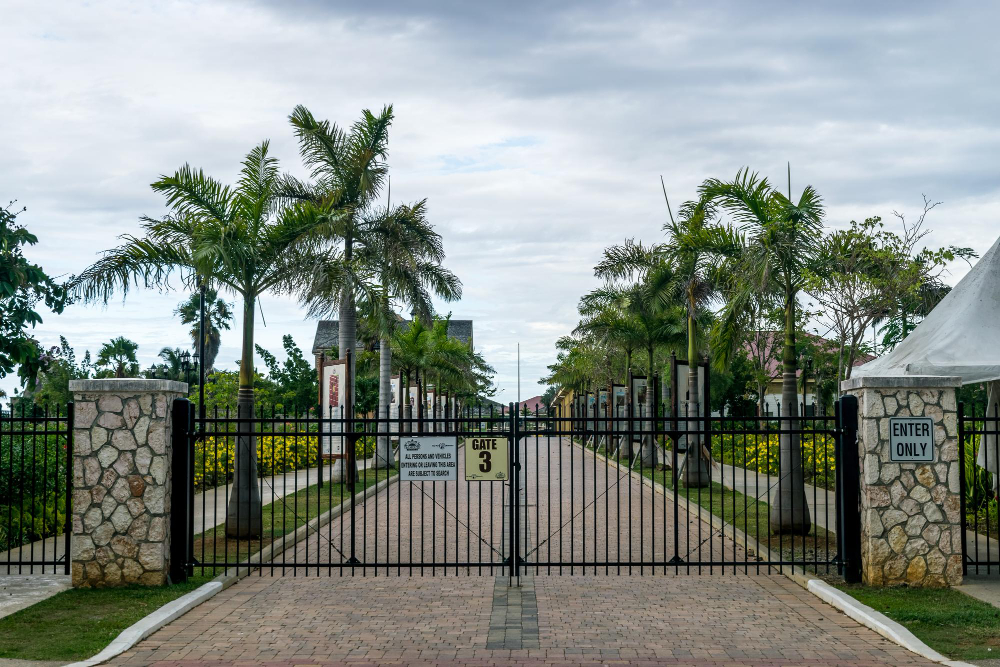
The New Rules of Luxury Plot Ownership: Governance, Community and Long-Term Maintenance
When “Gated” Is Not Enough
You drive into a plotted enclave that was the talk of the town in 2015. The entrance arch is still imposing, but as you pass the security cabin, you notice the boom barrier is permanently raised because the sensor broke months ago. The internal roads have hairline cracks that are starting to widen, the streetlights are a patchwork of different bulbs, and the resident WhatsApp group is currently a war zone over who should pay to fix the clubhouse roof.
Now, contrast that with a drive into a truly managed luxury community. It might be ten years old, yet the landscaping looks launch-day fresh. The security team logs your arrival digitally before you even park. The roads are pristine, and the residents aren’t arguing about petty repairs; they are discussing the upcoming wine tasting or the weekend cricket match.
Here is the thing about modern Indian real estate: in the luxury plotted market, the real differentiator is no longer just the size of the plot or the pin code. It is the governance model behind it. It is the invisible operating system that decides how decisions are made, how money is pooled, and how services are guaranteed for decades.
Why Governance Now Matters More Than Ever
The shift in India’s premium housing market has been nothing short of seismic. Post-pandemic, the desire for "land" has surged, but the expectations have evolved. Today’s buyer doesn’t just want a piece of earth; they want the infrastructure of a five-star hotel attached to it.
According to recent data from JLL, the luxury segment (homes priced above ₹3 crore) has seen its share of sales double in just two years, with markets like Delhi-NCR seeing nearly 44% of sales in this bracket. Simultaneously, Anarock reports indicate that average residential prices across top cities have risen by 9% annually, with land prices in key hubs like Bengaluru and Pune doubling over the last four years.
When you are parking that kind of capital into a plot, ad-hoc management is a financial risk. High-ticket communities come with complex infrastructure—sewage treatment plants (STPs), pneumatic water systems, EV charging grids, and smart security. The old "let’s collect money when something breaks" approach simply cannot sustain this level of engineering. The new rules of ownership are less about masonry and more about maintenance discipline.
Anatomy of a Luxury Plot Community
To understand why governance fails, we first need to look at what exactly we are managing. In the context of Indian luxury, a "plotted development" is a sophisticated micro-municipality.
We are talking about a master-planned gated estate that typically houses high-net-worth individuals (HNIs), NRIs, and senior professionals. These are buyers who travel frequently and cannot be expected to monitor whether the gardener has trimmed the hedges. The community relies on a web of "moving parts": internal arterial roads, complex drainage systems, manicured common gardens, clubhouses with gymnasiums, and multi-tier security.
The problem is gradual but predictable: entropy. If nobody is formally responsible for the STP, it fails. If the sinking fund isn’t ring-fenced, the road resurfacing never happens. Without a robust structure, the physical fabric starts to fray, and a "luxury enclave" quietly downgrades into "just another colony."
The HOA 2.0: From Resident WhatsApp Group to Real Institution
For years, the Resident Welfare Association (RWA) in India was synonymous with retired volunteers struggling to collect dues and fighting over parking spots. That model is obsolete for luxury assets.
Enter the Homeowners’ Association (HOA) 2.0. In the new luxury paradigm, the association is a professional institution, not an informal, volunteer-led body. It is established with clear bye-laws drafted at the project inception stage, often before the first plot is even sold.
- Defined Constitution: Voting rights, quorums, and decision-making powers are codified legally.
- Transparency: Budgets are not scribbled on notepads; they are professionally audited.
- Professional Support: The board sets the vision, but hired facility managers execute the work.
Regulatory frameworks, including RERA, are increasingly pushing for this structured handover. As a buyer, your questions shouldn't just be about the floor area ratio (FAR); they should be: “What is the constitution of the association? When does it legally form? What powers of enforcement does it have?”
Escrowed Maintenance Funds: Future-Proofing the Common Areas
This is perhaps the most critical financial firewall for your property’s value. An Escrowed Maintenance Fund is essentially a "forever fund" for the community’s health.
In the past, when a major expense arose—say, the internal roads needed re-laying after five years—associations would scramble to demand a sudden, hefty "one-time payment" from residents. This inevitably led to disputes, delays, and decay.
The luxury solution is to formalise this through an escrow mechanism.
- The Corpus: A significant sinking fund is collected upfront (often by the developer) and deposited into a ring-fenced account.
- The Lock-in: This money cannot be used for daily operational expenses (like buying bleach for the pool); it is reserved for capital expenditure (like replacing the pool pump).
- The Oversight: Withdrawals require specific approvals, ensuring funds aren't siphoned off.
This mirrors the financial discipline encouraged by regulatory frameworks such as RERA during the development phase and reflects emerging best practices in post-handover community management.
Service Contracts and Professional Community Management
The modern luxury buyer wants the privacy of a bungalow with the service levels of a branded residence. This is achieved through Professional Community Management.
We are moving away from hiring a local security guard and a freelance gardener. Instead, leading developments sign long-term service contracts with institutional Facility Management (FM) companies—the same ones that manage Grade-A office parks and five-star hotels.
- Service Level Agreements (SLAs): The contract doesn't just say "clean the park." It specifies that "grass must be maintained at 2 inches" and "security must respond to alarms within 3 minutes."
- Tech Integration: Management is increasingly digital. You use an app to pay dues, authorise guests, or raise a complaint about a flickering streetlight.
- Accountability: If the service drops, the contract has penalty clauses or termination rights.
When viewing a project, ask the developer: “Who will manage the common areas in year five? Is there a fixed-term contract in place? What happens if the vendor underperforms?”
Governance as a Driver of Long-Term Plot Value
It is easy to think of maintenance fees as an annoying overhead. In reality, they are an investment in your asset's exit value.
In plotted projects, the individual home is only half the story. A prospective buyer (or tenant) drives through the main gate before they ever see your front door. If the common areas are immaculate, the perceived value of your plot rises immediately. Conversely, Multiple market studies have noted that premium properties in well-managed estates command significantly higher resale values and lower vacancy rates than comparable properties in poorly governed areas.
For the NRI investor or the capital-preservation buyer, a strong HOA and a funded maintenance account are basically insurance policies. They ensure that the "brand" of the address doesn't dilute over time.
The Human Side: Community, Rules and Culture
There is often a fear that "strong governance" means living in a boarding school with strict rules. But in practice, clear rules actually create more freedom.
When everyone knows the boundaries—no loud music after 10 PM, no commercial activity in residential garages, adherence to architectural guidelines for facades—daily friction disappears. You don't have to have an awkward confrontation with a neighbour because the rules do the heavy lifting for you.
Mature luxury communities in India blend this formal structure with a vibrant social layer. Once the basics (water, security, roads) are running on autopilot thanks to the FM team, the residents can focus on the "soft" infrastructure: cultural committees, sports leagues, Diwali melas, and weekend farmers' markets. Good governance creates the peace of mind that allows a community culture to flourish.
How to Evaluate Governance Before You Buy
If you are in the market for a luxury plot, add "Governance Due Diligence" to your checklist alongside legal title checks.
- Ask for the Draft Bye-Laws: Do they exist? How is voting structured?
- Audit the Corpus: Is there a sinking fund model from day one? Who controls the account?
- The Management Plan: Will the developer manage it for the first few years? If so, is there a clear timeline for handover to a professional agency?
- The Budget: Ask for a projected maintenance budget. If it looks suspiciously low, it’s a red flag. Quality costs money.
- The Culture: If the project is partially occupied, look at the notice board (or the digital equivalent). Is the communication transparent, or is it a list of threats and fines?
Imagine yourself living there, not in year one, but in year ten. Governance is what ensures the dream survives that decade.
The Bottom Line: Luxury Is Now a Management Story
In the new era of Indian luxury plot ownership, the moat is not just the gate, the clubhouse, or the view. It is the operating system that keeps everything running smoothly.
When you buy a plot, you aren't just buying square yards; you are becoming a shareholder in a micro-city. The best communities will be the ones where HOAs behave like responsible boards, maintenance funds behave like trust accounts, and service contracts behave like long-term partnerships. That is how you turn a gated layout into a quietly compounding, living asset.
