

Blogs
We keep you up to date on the most recent real estate news and events.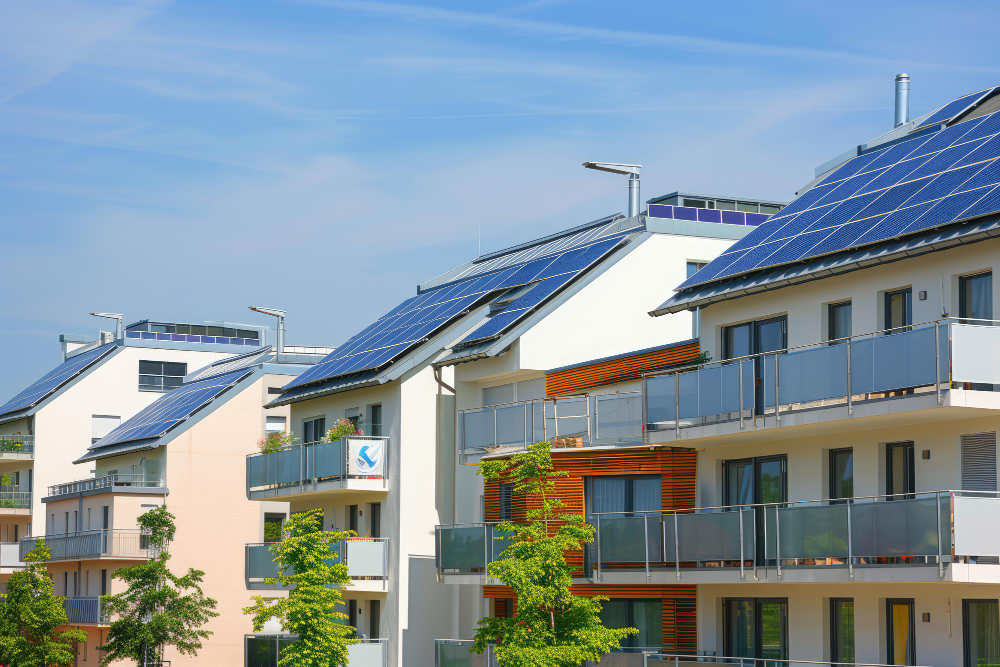
Energy Independence on Residential Plots: Solar + Battery Feasibility
For the owner of a large residential plot, the concept of "energy independence" has migrated from the realm of environmental idealism to that of infrastructure planning. In the context of premium independent estates—particularly in rapidly developing corridors where grid stability remains inconsistent—the energy system is no longer a secondary utility. It is a core design pillar. As high-net-worth individuals (HNWIs) and NRIs design expansive homes with heavy load profiles—incorporating central HVAC, heated pools, electric vehicle (EV) fleets, and sophisticated home automation—the reliance on the traditional grid becomes a strategic vulnerability.
Achieving true energy independence on a single-home estate involves more than just installing rooftop panels. It requires a technically grounded understanding of the "Solar + Storage" ecosystem: a hybrid configuration in which solar generation meets lithium-ion battery storage to buffer against tariff hikes and grid outages. This guide examines the feasibility, economics, and architectural trade-offs of such systems within the Indian regulatory and climatic framework.
1. Understanding Energy Demand in Single-Home Estates
The load profile of a large independent home on a private plot differs fundamentally from that of a luxury apartment. In a vertical development, common utilities are managed by a central body. On a plot, the owner is the utility provider.
A typical high-value estate (spanning 500 to 2,000 square yards) often supports a "peaky" load profile. Essential systems such as pressure pumps, sewage treatment plants (STPs), and elevators create constant baseline demand. However, the surge loads—driven by multi-zone VRV/VRF air conditioning and Level 2 EV chargers (7.4 kW to 22 kW)—can push instantaneous demand to 30 kW or higher.
The primary challenge is the temporal mismatch. Solar generation peaks between 11:00 AM and 3:00 PM, a window when residential occupancy and cooling loads are often at their lowest. Conversely, peak demand occurs in the evening (lighting and entertainment) and early morning (geysers and EV charging). Without a storage buffer, a plot owner remains 80% dependent on the grid despite having a massive solar array.
2. Rooftop vs. Ground-Mounted Solar: Spatial Trade-offs
One of the greatest advantages of a large plot is the flexibility in solar placement. While urban villas are restricted to rooftops, estate owners can evaluate ground-mounted or "integrated" structures.
Rooftop Constraints
In premium architecture, the roof is often a prized "fifth elevation" used for terrace gardens, bars, or infinity pools. Crowding this space with solar frames can compromise the home's aesthetic and functional value. Furthermore, complex roof geometries, parapets, and chimneys often create shading losses, where even a small shadow on one cell can reduce the output of an entire string by 30% or more.
The Plot-Level Alternative
For estates with ample setback areas or large gardens, ground-mounted solar offers superior efficiency. Panels can be oriented at the mathematically ideal tilt (typically 25–30 degrees in North India) without architectural compromise. Bi-facial modules—which capture reflected light from the ground—can increase yields by 10–15% when installed on light-coloured gravel or reflective surfaces. However, owners must navigate local building bylaws; in many Indian jurisdictions, ground-mounted solar may be counted toward "ground coverage" limits, potentially reducing the permissible built-up area of the main house.
3. Battery Storage: Sizing, Chemistry, and Lifespan
The "battery" is the heart of energy independence. For a single-home estate, the goal is rarely "off-grid" living (which is prohibitively expensive) but rather "Time-of-Use" (ToU) optimisation and blackout resilience.
Chemistry: LFP vs. The Rest
For Indian residential applications, Lithium Iron Phosphate (LiFePO4 or LFP) has emerged as the industry standard. According to reports from the India Energy Storage Alliance (IESA), LFP chemistry is preferred over NMC (Nickel-Manganese-Cobalt) due to its higher thermal stability—a critical factor in Indian summers—and significantly longer cycle life.
Sizing for the Estate
- Critical Load Backup: Sizing a battery to run only lights, fans, and security systems. (Typically 10 kWh to 15 kWh).
- Full Resilience: Sizing to run ACs and pumps during a 4-hour evening outage. (Typically 40 kWh to 80 kWh for a large estate).
A critical metric for plot owners is the Depth of Discharge (DoD). Modern LFP batteries allow for a 90% DoD, meaning a 10 kWh battery provides 9 kWh of usable energy. However, degradation is inevitable. Leading manufacturers like Tesla (Powerwall) or domestic Tier-1 players like LivGuard or Luminous suggest that batteries typically retain 70-80% of their capacity after 10 years or 3,000–5,000 cycles, depending on ambient temperature management.
4. Backup Strategies: The Hybrid Configuration
In the Indian context, "energy independence" is best achieved through a Hybrid Inverter System. This setup connects to the solar panels, the battery bank, and the grid simultaneously.
The Islanding Capability
During a grid failure, a standard "grid-tied" solar system shuts down automatically for safety (to prevent back-feeding the grid). A hybrid system with an Energy Management System (EMS) "islands" the home, allowing the solar panels to continue powering the house and charging the batteries even when the grid is dead.
Solar + Battery + DG Set
For ultra-high-value estates, the Diesel Generator (DG) set is increasingly relegated to a "tertiary" backup. The battery handles short outages silently and instantly, while the DG set only triggers if the battery drops to 10% reserve during an extended multi-day monsoon blackout. This significantly reduces diesel consumption and maintenance costs while eliminating the "flicker" associated with DG start-up.
5. Financial Feasibility and Payback Periods
The economics of solar + storage require a nuanced view. While solar panels have reached record lows, battery costs remain a significant capital expenditure (CAPEX).
Current Cost Estimates (2026 Projections)
Based on data from the Ministry of New and Renewable Energy (MNRE) and prevailing market rates for premium Tier-1 components:
- Solar PV (On-grid): ₹55,000 – ₹65,000 per kW (Installed).
- LFP Battery Storage: ₹25,000 – ₹35,000 per kWh of usable capacity.
- Hybrid Inverters: ₹1,50,000 – ₹4,00,000 depending on phase (Single vs. Three-phase) and surge capacity.
The Payback Equation
For a 15 kW solar system with a 30 kWh battery bank on a high-end estate, the total investment may reach ₹18–22 lakhs.
- Pure Solar Payback: In states like Delhi or Maharashtra with high residential tariffs (₹10–12/unit), the solar component pays back in 4–5 years.
- Battery Payback: The battery component rarely "pays back" solely through energy savings. Its value lies in avoided costs: diesel costs, protection of sensitive electronics from voltage surges, and the intangible value of uninterrupted comfort.
When factoring in "Net Metering"—where excess solar is sold back to the DISCOM—the overall system payback usually sits between 7 and 9 years. For a home intended to be held for 20+ years, this represents a significant Internal Rate of Return (IRR).
6. The Regulatory Landscape: Net Metering and Beyond
The feasibility of solar on a plot is heavily dictated by state-level DISCOM policies. Investors must distinguish between Net Metering and Gross Metering.
- Net Metering: The "Gold Standard" for homeowners. Your meter runs backwards when you export energy. You only pay for the "net" consumption at the end of the month. Most states in India allow Net Metering for residential loads up to 10 kW or 500 kW, depending on the transformer capacity.
- Virtual Net Metering: Emerging in some progressive jurisdictions, this allows an owner with multiple plots to generate energy on one and credit it against another.
It is important to note that most subsidies under schemes like PM-Surya Ghar: Muft Bijli Yojana are targeted at low-to-mid-income households (typically up to 3 kW). For the 15 kW+ systems required for large estates, the homeowner should expect to bear the full cost, focusing instead on the GST benefits available for solar components (currently 12% on a consolidated basis).
7. Practical Guidance: Avoiding "Lock-in" Mistakes
For those in the design or construction phase of a plot development, specific decisions can determine whether a solar + battery system is a success or a white elephant.
Design-Stage Checklist:
- Conduit Readiness: Ensure heavy-gauge conduits are laid from the roof/garden to the electrical room during the RCC stage. Retrofitting high-voltage DC cables is expensive and unsightly.
- The "Battery Room" Climate: Batteries degrade faster in heat. Locating the battery bank in a basement or a ventilated, shaded utility room can extend its life by 2–3 years compared to a rooftop cabin.
- Phase Balancing: Large homes run on three-phase power. Ensure your hybrid inverter can handle "unbalanced loads" (e.g., if a heavy AC is running on Phase A while the other phases are idle).
- EV Integration: Select an EV charger that supports "Solar Diversion." These smart chargers detect when the house is exporting excess solar power to the grid and automatically divert that power to the car’s battery, effectively "storing" sunshine in your vehicle.
8. Conclusion: When is it Rational?
Energy independence on a residential plot is rarely a binary "Yes" or "No" decision. Instead, it exists on a gradient.
For the plot owner, a grid-tied solar system without batteries is the most "rational" financial investment, offering the fastest payback. However, for the homeowner who views their estate as a sanctuary or a resilient asset, the Solar + Battery + Grid hybrid model is the only logical choice. It mitigates the risk of rising utility tariffs—which have historically increased by 3–5% annually in India—and provides power quality and reliability that the grid cannot yet guarantee.
As we move toward 2030, the "Zero-Bill Home" is becoming a tangible reality for the Indian estate owner. By sizing the system for 80% self-consumption rather than 100% off-grid autonomy, homeowners can achieve a balance of technical resilience and financial prudence.
