

Blogs
We keep you up to date on the most recent real estate news and events.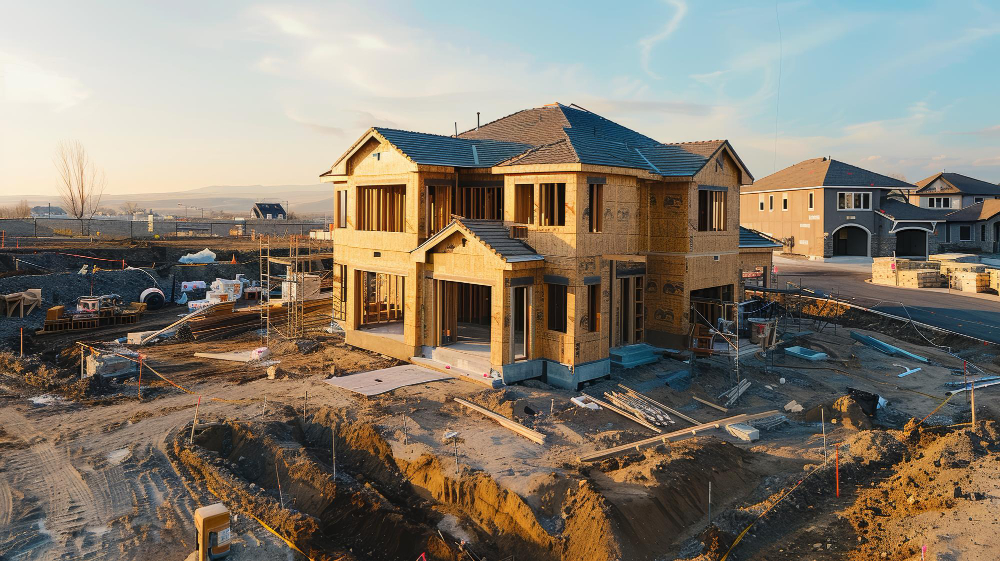
When Is the Right Time to Build on a Plot—and When Is It Better to Wait?
1. Opening: The Real Decision Starts After Buying
Securing a premium plot often feels like the culmination of a long, arduous real estate journey. The title deed is signed, the asset is secured, and ownership is absolute. Yet, for many buyers, this milestone marks the beginning of another important decision: whether to begin construction immediately or wait for the timing to align better.
This question frequently paralyses buyers, creating a sharp conflict between emotional ambition and financial timing. A persistent anxiety exists—if you wait, construction costs might skyrocket; if you build too early, you risk maintaining an empty house in an underdeveloped sector. This is not a matter of subjective readiness; it is a critical capital allocation decision. The timing of your construction governs not just the final cost of the physical structure but also the long-term operational viability and secondary-market valuation of the entire asset.
2. Why Timing Matters More Than Buyers Think
The assumption that a built home is inherently more valuable than an empty plot is fundamentally flawed. In real estate economics, land appreciates while structures depreciate. When you build, you initiate the depreciation clock on a highly capital-intensive asset.
Timing dictates whether that depreciation is offset by utility or whether it merely drains your capital. If you construct a premium home three years before the surrounding neighbourhood matures, your property suffers from premature environmental wear, dust from adjacent plots, and high maintenance costs—all while delivering zero lifestyle utility. Conversely, deferring construction indefinitely exposes you to aggressive inflationary cycles. Choosing the right construction timeline often involves balancing land holding benefits against rising construction costs. Timing does not just influence your budget; it actively shapes the property's ultimate exit value.
3. When Building Immediately Makes Sense
There are specific financial and operational scenarios where accelerating construction is the mathematically superior choice. The primary driver is the volatility of material prices. Industry reports by JLL and other real estate consultancies continue to indicate steady inflation in construction-related input costs. If your capital is liquid and ready, beginning construction earlier may help buyers manage future escalation in labour and material costs.
Furthermore, immediate construction makes sense if your personal use is urgent or if the property will serve as an active primary residence. From a tax perspective, building quickly is highly advantageous for buyers who are leveraging housing finance. Certain home loan tax benefits in India may become applicable after construction completion and possession, depending on the buyer’s financial structure and eligibility. Delaying construction means paying pre-EMI interest without the corresponding tax shield. If the surrounding infrastructure is operational and your financing is secured, building immediately transitions the plot from an idle land asset into an actively yielding lifestyle or rental asset.
4. When Waiting Is the Smarter Move
In stark contrast, strategic delay is often the most intelligent position for investors and long-term planners. If a plotted township is in its nascent stages of phased development, waiting is imperative. Constructing your home while heavy civil engineering machinery is still laying adjacent roads or sewage lines subjects your property to severe collateral damage.
Moreover, if your primary goal is capital appreciation, waiting preserves your financial flexibility. As highlighted by Knight Frank’s analyses on housing demand insights, raw land within a premium, structured community often appreciates faster in percentage terms than a fully constructed, bespoke house, which limits the secondary buyer pool to people who share your exact architectural taste. If you do not intend to use the property for another five to seven years—perhaps aligning with retirement—building now is a severe misallocation of capital. You will lock millions of rupees into a depreciating structure that requires relentless maintenance, security, and utility payments, yielding no immediate lifestyle dividend.
5. Understanding Construction Cost Cycles
To master construction timing, one must understand the macroeconomic cycles governing building costs. Construction is a highly resource-intensive process, making it deeply sensitive to global supply chains and domestic inflation.
The Reserve Bank of India (RBI) tracks inflation and interest rate trends, which directly dictate the cost of both raw materials and the capital borrowed to purchase them. Material cost volatility—particularly in structural steel and premium finishing materials—operates in unpredictable cycles. Labour costs, however, follow a rigid, unidirectional upward trajectory. While it is tempting to try to 'time the market' to catch a temporary dip in cement prices, inflation ensures that the baseline cost of construction inevitably rises year-on-year. Therefore, while waiting protects you from building in an underdeveloped zone, you must actively model a 6% to 8% annual escalation in your future construction budget to avoid a funding shortfall when you eventually break ground.
6. Infrastructure Readiness as a Key Trigger
The most critical external trigger for construction is the township's infrastructure readiness. Building a premium structure is entirely futile if the requisite civic lifelines are absent.
An intelligent buyer evaluates the ground reality against the Ministry of Housing and Urban Affairs' insights into urban development, which emphasise the need for integrated civic amenities. You must critically assess whether the internal roads are permanently paved or merely levelled. Are the underground electrical grids, stormwater drains, and municipal water connections fully commissioned? High-end plotted developments often execute these rollouts in strict phases. Initiating construction before your sector is connected to the master grid forces you into expensive, temporary workarounds—such as relying on water tankers or diesel generators. True readiness means the infrastructure is not just promised in a brochure, but operationally functioning at your plot's boundary line.
7. Financial & Lifestyle Alignment
Beyond external market forces, the decision to build must align flawlessly with your personal financial liquidity and lifestyle trajectory. Constructing a home is an intensive, cash-hungry endeavour that routinely exceeds initial budget estimates by 15% to 20%.
If your current financial buffer is strained, or if liquidating other assets to fund construction would disrupt your broader investment portfolio, waiting is the necessary, disciplined choice. Similarly, lifestyle alignment is paramount. A home designed for a young family with school-going children functions very differently from a quiet retirement retreat. If your life stage is likely to undergo a significant transition in the next few years—such as children relocating for higher education or an impending career shift—building a highly specific, permanent structure today restricts your future adaptability. Delaying construction allows your architectural plans to evolve in step with your family’s actual long-term requirements.
8. Common Timing Mistakes
Observing the secondary market reveals a clear pattern of costly timing errors made by impatient buyers. The most prevalent mistake is making emotional decisions—rushing to build a sprawling, premium mansion in the middle of an underdeveloped area simply to justify the purchase. The result is a high-maintenance island surrounded by ongoing civil work.
Another frequent error is severely underestimating the bureaucratic timeline for local authority plan approvals, leading to stalled sites and expiring contractor agreements. Finally, buyers who build a decade before their planned move-in date suffer from architectural and technological obsolescence. By the time they actually occupy the home, the spatial layout feels dated, the electrical infrastructure cannot support modern smart-home ecosystems, and the aesthetic requires a highly expensive, immediate renovation.
9. The Decision Framework
To cut through the ambiguity, buyers should apply a strict, binary decision framework to determine their construction timing.
Execute Construction Now If:
- Your personal use or rental deployment is immediate.
- The township’s infrastructure (roads, water, power) in your specific sector is 100% operational.
- Your capital is completely liquid, and you wish to lock in current material costs.
- You need to activate tax deductions on an existing home loan.
Strategically Wait If:
- The surrounding sector resembles an active construction zone for heavy machinery.
- Your intended usage (like retirement) is more than three years away.
- Your current financial flexibility is limited, leaving no buffer for cost overruns.
- You are holding the plot primarily as a liquid asset for short- to medium-term resale.
The Practical Checklist: Before breaking ground, ask yourself: Are statutory approvals clear? Is the civic grid live? Am I ready to absorb the maintenance costs from day one?
10. Conclusion: Flexibility Is the Real Advantage
The fundamental advantage of purchasing a plot over a pre-constructed apartment is the absolute control it grants you over your capital. A plot is a patient asset. It does not force you into a rigid payment plan or a developer’s construction schedule. It provides the ultimate luxury in real estate: flexibility.
However, owning that flexibility is only half the equation; the real commercial value is generated by intelligently timing it. Whether you choose to leverage current costs by building immediately or protect your capital by waiting for the ecosystem to mature, the decision must be emotionally detached and mathematically sound. At Trident Hills, our structured, phased development approach is designed to give plot owners total clarity on infrastructure timelines, ensuring that whenever you decide to build, the ecosystem is entirely ready to support your vision.
